
Photo by C. Vang.
This week I am featuring a guest blog post by writer Chee Vang to broaden conversations on Minnesota history and identity. Chee reflects on indigeneity and decolonization as a US-born Hmong American on Dakota land. This blog post is a shortened version of a longer essay.
America. This place meant a new life after the Secret War. Laos. This place meant refuge after thousands of years of fleeing persecution. Southern China. This place meant the motherland of the Hmong.
Displacement is why Hmong people will never know the feeling of returning home.
The water spirits of the Mississippi River, the Mekong River, and the Yellow River are the memory holders and the silent knowers of the Hmong people. The waters remember the essence of the people, although the people themselves have strayed—American-born Hmong people don’t know how to call themselves home because no place on the map marks their origin. The definitions of homecoming vary for writers, scholars, travelers . . . humans. In the Hmong culture, hu plig is a traditional practice to call back lost souls that have detached and traveled far away from the person.
In July 2022, I went on the walk “Learning from Place: Bdote” with the Minnesota Humanities Center at Fort Snelling State Park and Indian Mounds Regional Park in St. Paul. One of the facilitators Ethan Neerdaels said, “There’s a spiritual umbilical cord that connects the indigenous to the land. Those who are lost are looking for their umbilical cord.”
He spoke of the Dakota people, known as the friendly people and the star people, and how the remaining six (of originally thirty to sixty) burial mounds in St. Paul are shaped like pregnant bellies to represent how “we come from the mother and return to the mother.” This Dakota land is a mother we need to exist, but we have not given her great care. We have ignored the wealth of knowledge and practices that the indigenous people knew and practiced long before. This Dakota land with its tall cottonwood trees, also known as doctoring trees, which share resources with nearby plants who need them. Their roots mitigate flooding, essential in the state of 10,000 lakes and many rivers. This land remembers and holds the Dakota peoples’ indigeneity despite the violence of colonialism.
Around 4,000–3,000 BCE the Hmong lived on their ancestral land in Southern China by the Yellow River. They first built their connections to land as rural farmers. They invented their own tools and weapons and lived with other ethnic groups under the mythical Hmong king known as Txiv Yawg (Chi You), who was thought to have magical powers to control the weather. He fought many wars against the imperial Chinese who wanted to take over the land. After many victories against the Chinese Emperors Huang Di and Yan Di, the two Chinese emperors allied to take Txiv Yawg down.
Afterwards, speaking and writing in Hmong was outlawed and Hmong people had to assimilate to Chinese culture if they wanted to live. The descendants of these Hmong ancestors who stayed are known today as the Miao people.
The defeat of Txiv Yawg ended the era of Hmong people without a hyphen. Our diaspora started, and our indigeneity was stripped—but not dissolved. The Hmong people who did not want to assimilate migrated and became Hmong-Lao, Hmong-Vietnamese, Hmong-Thai, and so on.
As a child, I grew up hearing that Hmong people were originally from China, but it always felt like a fairy tale. Many Hmong Americans don’t know about Txiv Yawg and the Hmong Miao people because many of the Hmong writings were destroyed. These pieces of the history puzzle came only from sources such as ancient Chinese writings, the statue of Txiv Yawg in China and Hmong folk stories.
As I listened to how the Dakota people’s spiritual umbilical cord connected to the Minnesota land, I am reminded of Hmong people’s amniotic sacs buried on the ground floors of a house for the boys and outside of the house for girls, in China, Vietnam, Laos, or Thailand because after life the soul finds its way home by going back to this shirt they came into the world in. What about those who were born in America and didn’t have their shirt buried? How will their souls find home?
During my walk, I felt several connections with the indigenous people of America. The Hmong faced a similar history with stolen land and ancestors facing genocide and assimilation. The Hmong people were also very spiritual. Traditionally, Hmong people lived in reciprocity with nature and believed all people and inanimate objects had a soul or spirit. When out in nature, we spoke to the spiritual owners of the land and asked permission to hunt. We promised to not take more than we need, and to not cause harm or destruction. We gave food as offering and in return, we asked for the spiritual owners to protect us. I still hear about people who do this. Many American-born Hmong don’t have this deep sense of connection to land as our parents and grandparents, not even on the land in America.
I remember in the 90s hearing elders at parties, or people on Hmong radio or TV cry over leaving and losing their homeland. The kwv txiaj poetry songs people sang were often about the pains of war, losing loved ones, losing land and not having a country. This was after the Vietnam War in Laos, where the Hmong people lived in the mountains before becoming refugees and migrating to America.
To this day, my parents still rent land to farm every summer and sell their crops at the local farmer’s market, an activity my siblings and I never liked. We felt like they didn’t have to farm because they were no longer in Laos. But as an adult, I’m amazed at how intuitively my parents know what and how to grow successfully every season even though they read, write, and speak little English.
My mother is a gifted medicinal herbalist. As a child, I never liked her herbal medicines. In my old neighborhood people had beautiful red, purple and pink flowers in their yards. My mom said they were opium flowers and suggested planting some too. My siblings and I discouraged her because we knew that opium was a bad drug. However, my mother insisted that it was a good medicine for coughs.
In 2020, many Hmong elders smoked opium to avoid or relieve COVID-19. Even then I thought people should stick to cough syrup. Now, I am encouraged to see the natural knowledge of the Hmong people. Opium is a cough suppressant; like all medicines, it is helpful when not abused.
I recalled these things during the Bdote walk when I learned how Dakota women traveled to the Mississippi River bluffs to give birth. The other facilitator Ramona Kitto Stately shared how the land would tell the women how to take care of their bodies. The natural world had medicines all around that the women could use to stop the bleeding.
Learning about how the Dakota people lived on this land helped me appreciate the knowledge that indigenous people have. I also felt rage and sadness over times when others exploited their indigeneity and then discarded it when they got what they wanted.
In particular, it feels like such a case when the Hmong people were recruited by the CIA to fight a secret war during the Vietnam War. Because Hmong people knew the mountains of Laos well they were used as guerilla soldiers, but once Hmong refugees arrived in America they were treated as unskilled people.
My good friend Saulkdi Yangh told me that Hmong people may be displaced from the homeland in China, but as long as we are alive, we are still connected to the earth. “[Hmong] practice and way of life is more important than just being born somewhere. If we forget our practices [and assimilate], we lose that sense of indigeneity . . . colonialism is so violent because of this—it kills indigeneity.”
Hmong people may never know what it feels like to return home in the physical sense, but we can decolonize our thinking so that we can hear our ancestors’ words and revitalize Hmong indigeneity to call our souls home.
Hmong Americans rely on art forms sustained after the exodus of China—traditional stories, folk songs, instrument songs, and paj ntaub textile designs—to keep their indigenous txuj ci (knowledge, skills and abilities). The Imperial Chinese cut out the tongues of anyone who spoke Hmong, but our language survived through the art forms. Hmong women preserved Hmong txuj ci through the paj ntaub sewn onto clothing. To outsiders it looked like beautiful patterns, but the Hmong knew what the symbols and motifs represented. The Hmong lost many things when they lost their native land, but language remained. That is why Hmong language is power, it is txuj ci.
The Dakota language is critically endangered. The facilitators spoke about the institutional erasure of language for indigenous peoples. For example, the Minnesota Department of Education (MDE) only recently recognized indigenous languages after they recognized languages of others who arrived later such as Hmong and Somali. What is the reason for this? Why is the truth about what happened to the Dakota people in Minnesota not told? Ramona asked participants to consider these questions.
Although there are problems with institutions, they allow languages such as Hmong to be cemented, not lost. I see how hard Hmong educators advocate for Hmong language to be offered in schools. Students are enrolling in these courses, but some school districts cut classes and close schools that focus on Hmong language and culture, so students must take French or Spanish instead. Language programs shouldn’t be prioritized solely by notions of usefulness rooted in colonialism and imperialism.
The Bdote Memory Map website states, “The Dakota Language is written on the landscape of the Twin Cities.” The Dakota names for the state and some cities remind us that people are speaking the Dakota language (just really badly, as Ethan said). Dakota language is alive and around us even if we were brought up to believe it was dead.
As a writer, as a teacher of English and Hmong Language, I had been ruminating about language reclamation in recent years. I grew up in a heritage Hmong-speaking household, but I did not identify as a fluent speaker in my younger years. When I started writing fiction and nonfiction, I grasped at feelings that were Hmong without being able to express them in the language. As Ethan told the Bdote walk participants, “There is knowledge in Dakota words that English cannot capture.” It is a sentiment that other multilingual speakers can relate to as well.
In language reclamation work, language is never dead, it is only sleeping. Language patiently awaits its people to breathe life back into it, to speak and release its power and knowledge. Hmong language has abided for forty-plus years in America, but many Hmong kids today don’t know Hmong. The most fluent speakers are elders nearing their transition stages.
Our elders, who remember the air from the mountains of Laos, who fought as eleven-year-old boys in America’s war in Vietnam, who hid from persecution and crossed the Mekong River to Thailand refugee camps before making it to America, this generation never had to question their Hmong identity—they just knew resolutely that they were Hmong. When we lose them, we will lose the language and knowledge too. There is a Hmong saying that an elder dying is like a library burning down. Our community lost many elders during the years of COVID-19.
So how do Hmong Americans living on Dakota land call themselves back home?
Traditionally, Hmong believed every person had three souls or spirits. When a person experiences trauma that puts them in a state of fright, it is called poob plig, meaning their soul has fallen or departed from the physical body. Often, people don’t notice when their spirits have wandered off. They just continue with their normal day-to-day.
The Hmong have carried collective traumas from war and poverty, namely the genocide in China and the Secret War in Vietnam. These traumas made it difficult for our great ancestors, grandparents, and parents to care for their children. And the cycles have continued. Symptoms of these traumas appear today with Hmong people feeling alienated or indifferent toward anything Hmong. When people are judgmental without accurate information, divisive, or just mean-spirited to others and especially other Hmong people. When young people are apathetic about their lives and sense of self. This is not the true nature of Hmong people.
We are a people of great skills and intelligence. We respected the land we lived on. We valued our relationships with families and communities. We are people of kindness and goodness who work hard.
After all of the traumas and years of not understanding or knowing their cultural roots, many Hmong Americans only know this life as a lost Hmong soul. Each time Hmong Americans turn their faces away from being Hmong and choose the American dominant culture and status quo, it is a result of the collective soul loss.
What happens when Hmong language and culture disappear? When people cannot communicate with their parents in the mother tongue. When people do not know how to send the deceased elders on their journey in the spiritual lands. When people let their ancestors go hungry. When they don’t know what value and strength and power runs in their veins—the essence of the Hmong soul continues to wander farther away. It gets harder to speak the words to call ourselves back home.
During the Bdote walk, Ramona and Ethan shared a folktale about a giant and a spider who could shape-shift. I won’t retell it in detail, as this story belongs to the Dakota people. The giant ate everyone in the village and the people were left in the darkness of the giant’s belly. The village grandma, cut the giant open from the inside the belly with her obsidian knife. When the villagers left the body of the giant, they spoke in different tongues.
The grandma is the original mother, the cultural bearer who courageously saves her family. She knows the txuj ci, the original and closest mother tongue. I think of the Hmong women of the past who preserved Hmong language, stories and writing with paj ntaub designs on clothes so that later generations could find the codes. I think of Hmong mothers and grandmothers who have soul called their children and grandchildren who fall, get scared, and lose themselves entirely. I think of the Hmong women who have taken their paths as shaman healers so they can help people find peace and balance spiritually and physically. The grandma in that folk story represents for me how deep, kind, relentless, and fearless a mother’s love can be for her children and how she will endure and face anything so that the generations that follow can flourish.
The relevance of this story? Ramona and Ethan pointed out we all continue to be consumed today by many things. The consumption makes us forget our indigeneity because we forgot who our people were before the giant. Ramona and Ethan finished the story with this takeaway: “The only way to defeat the giant is to know yourself.”
And the grandma? She represents anyone who stands authentically in the face of danger.
There are no clear directions on how to find your way back home for those who are displaced, immigrant, and refugee. But we are not homeless and we are not hopeless. Language is one way to call us back, as language connects to our Hmong spirit, and we can use our spirituality to return home. But most importantly, connection lights the way.
We are taught to be kinder, more courageous and compassionate when we recognize our interconnectedness with each other and with land and nature. On the Bdote walk, Ramona and Ethan greeted participants as relatives and reminded us that we are all related to everything around us—we humans are the youngest in the ecology of the world. We are the weakest because we must take more than we give, unlike other organisms.
Sometimes, people do not want to come home. Perhaps they feel home is suffocating or limiting. For those who felt they skated in the margins and had to minimize themselves in Hmong families and communities, those who rejected Hmong culture because Hmong people rejected them first, you can still come home. In fact, you make home better through your gifts and skills.
But calling yourself home in the way that feels authentic to you is most important.
To call yourself back home is to recognize and embrace your soul, to align with your purpose, to heal and forgive so that you may grow in understanding and exert goodness, to know your roots and their history. It can be any thing, in any way that is right for you.
I call myself home through revitalizing Hmong language. I like to say revitalize rather than reclaim because Hmong language has been mine ever since I was born on this earth as Hmong. I also call myself home through my writing. I call myself home through spirituality and Hmong shamanism. I call myself home through being peace and calm in a world where these attributes don’t seem to fit. I do it anyway.
A person’s spirit can be called in numerous ways, and words are some of the most powerful. Soul calling requires speaking with loving words and song. Words must have care, emotion, and urgency. A friend shared with me that he could see my soul within my writing. He could see how my writing calls back people’s souls through careful and loving words, each having intention and purpose. Although Hmong Americans are at risk of forgetting our language, I write to create the blueprints, memories, feelings, experiences, and more to remind others of their roots and to call back their spirits too. I write to help others heal, encourage compassion, and find courage to love others and love themselves.
To be a writer on Dakota land is to learn about the history of the place I live. When I acknowledge this Dakota land as a Hmong American, I honor and recognize the indigenous people of Minnesota and their ancestors for the wealth of knowledge and resources they have shared with Minnesotans, and the sovereign land that they allowed the colonists to occupy, but not own. May we never forget the ugly history of the broken treaties and genocide that happened in this state. And for those who don’t know the history of what happened here, who haven’t had the chance to learn about the txuj ci of the Dakota people, I urge you to look into it—you will find the soul of the Dakota people all around.
To be a writer on Dakota land is to see the interconnectedness of the worlds and people around me. It is to find and know my own history. Sometimes we must see others fight for the preservation of their language and culture to recognize the value of what is at risk or missing from our own lives. For half of my life I’d been looking to revitalize Hmong language, looking for ways to live authentically. For this reason the Bdote walk resonated with me deeply as I learned about the Dakota people’s spiritual ways of being. Each time we connect and live in ancestral ways, we feed and nurture indigeneity and in turn we shrink colonization.
I couldn’t write everything I learned on the Bdote walk. These stories are not mine to tell when people from the indigenous community own this knowledge and have their own wonderful ways to tell it. I can only tell my story and the connections that I made. I am grateful for the Dakota people in Minnesota (and other indigenous people on this land) and their work in indigenous language reclamation and preservation of culture and traditions. It is a guide for others like the Hmong people who look to reclaim our own indigeneity. It reminds me that although my Hmong people no longer have our own country, we are able to call ourselves home by connecting with the essence of our Hmong soul while living on Dakota land.
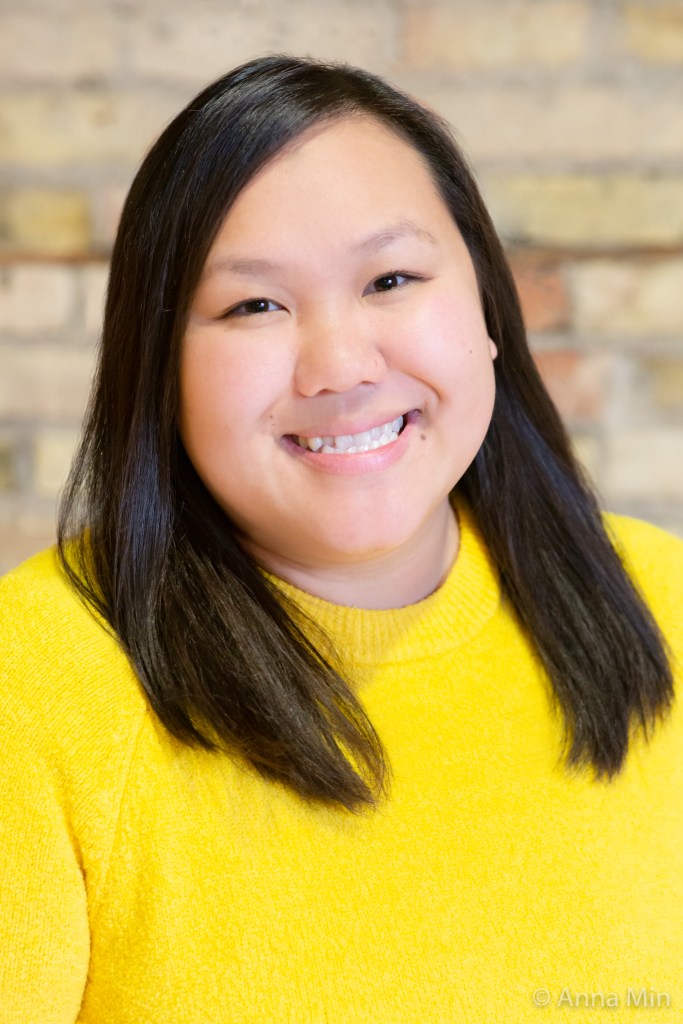
Photo by Min Enterprises Photography
Chee Vang is a 2019 Fiction Writing Fellow of The Loft Mentor Series and a graduate of the Master’s in Creative Writing and Publishing program at the University of St. Thomas. She has a background in teaching communication arts and literature for grades 5-12 and Hmong culture and language. Her published writing can be found in Ramsey County Library’s anthology This Was 2020, Summit Avenue Review, Hmong Educational Resources (HER) Publisher, and the Hmong Museum’s Digital Zine.
Patti Kameya is a fiscal year 2022 recipient of a Creative Support for Individuals grant from the Minnesota State Arts Board. This activity is made possible by the voters of Minnesota through a grant from the Minnesota State Arts Board, thanks to a legislative appropriation from the arts and cultural heritage fund.

 Patti Kameya